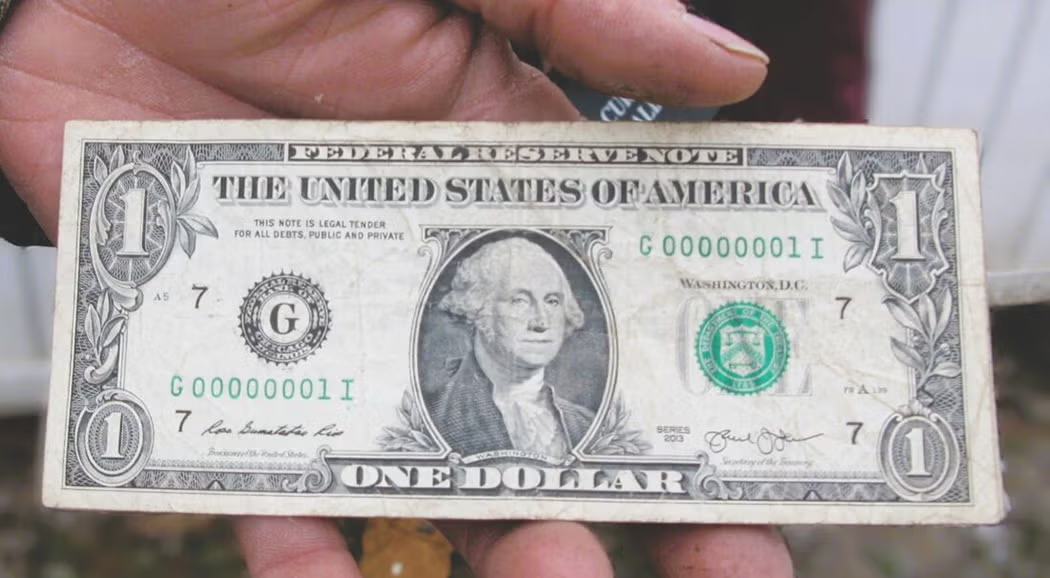
A dollar bill serial number is a unique 11-character code printed twice on the face of every Federal Reserve note. It identifies each bill individually and is used by the Bureau of Engraving and Printing to track production. The number consists of a prefix letter (indicating the Federal Reserve Bank), eight digits, and a suffix letter. Collectors often pay a premium for “fancy” serial numbers, such as “ladders” (12345678) or “binaries” (only 0s and 1s).
While most serial numbers have no extra value beyond face value, certain patterns – like repeating digits, low numbers, ladders, or radar serials – can make a bill worth $20 to $1,000+ to collectors of currency known as notaphilists.
How Serial Numbers Are Structured
| Position | What It Represents | Example |
|---|---|---|
| First letter (prefix) | Federal Reserve Bank district (A-L) | A = Boston, B = New York, L = San Francisco |
| 8 digits | Unique serial sequence | 00000001 to 99999999 |
| Last letter (suffix) | Print run identifier (A-Z, then AA-ZZ) | A = first run, B = second, etc. |
| Star (*) symbol | Replacement note (reprinted due to error) | *12345678A |
Why Some Serial Numbers Are Valuable
| Serial Type | What to Look For | Estimated Collector Value |
|---|---|---|
| Low serial numbers | 00000001 to 00000100 | $100-$1,000+ |
| Ladder serials | 12345678 or 87654321 | $100-$500 |
| Radar serials | Same forward and backward (e.g., 12344321) | $20-$150 |
| Repeater serials | Pattern repeats (e.g., 12341234) | $20-$100 |
| Solid/fancy serials | All same digit (e.g., 77777777) | $500-$5,000+ |
| Binary serials | Only 2 digits used (e.g., 10100110) | $20-$100 |
| Star notes | Serial ends with a star symbol (*) | $3-$150+ depending on rarity |
| Trinary serials | Only 3 unique digits used throughout | $15-$75 |
How to Read Your Bill’s Serial Number
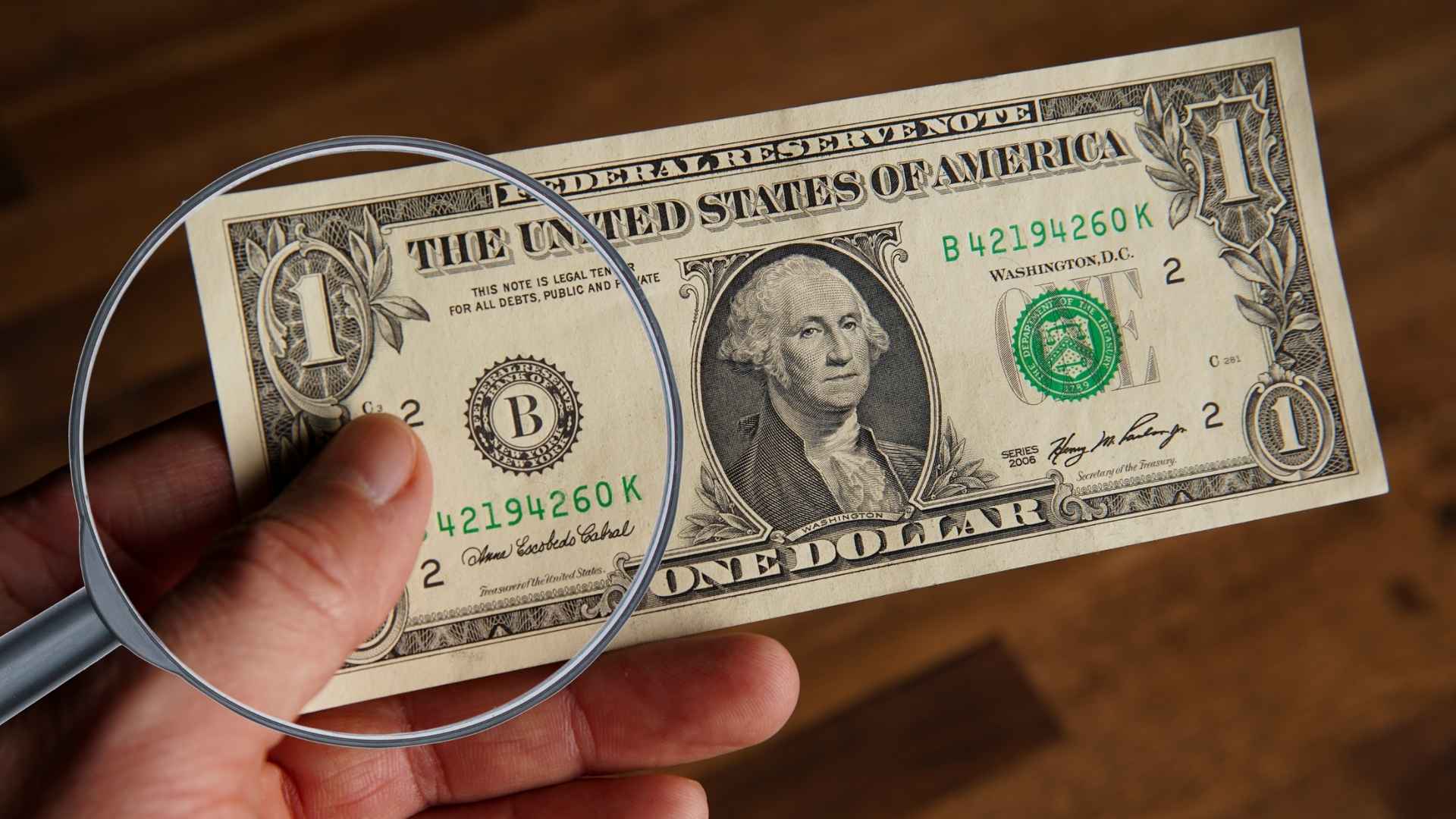
- Look at the face (front) of the bill – the serial number appears twice, in green ink.
- The full serial number includes the leading letter, eight numbers, and the trailing letter.
- A star (*) at the end means it’s a replacement note – these are less common and can be more valuable.
- Check if your number matches any of the valuable patterns listed above.
Where to Check and Sell Valuable Bills
- CoolSerialNumbers.com – Free tool to check if your serial is considered ‘fancy.’
- eBay – Search completed listings for your serial number type to see real sale prices.
- Paper Money Forum (PMG Forums) – Community of collectors who can assess your bill.
- Heritage Auctions – Best for rare, high-value currency pieces.
- Local coin/currency dealers – Good for quick appraisals on valuable notes.
How to Protect a Valuable Bill
- Never fold or crease a bill you think is valuable.
- Store in a plastic currency sleeve (available at coin shops or Amazon).
- Consider professional grading through PMG (Paper Money Guaranty) for high-value notes.
Most bills in your wallet are worth exactly face value – but it takes 30 seconds to check. A solid serial (like 99999999) on an otherwise ordinary $1 bill could be worth hundreds of times its face value to the right buyer.